

Israeli officials are preparing to brief U.S. President Donald Trump on options for striking Iran’s ballistic missile program once again, driven by growing alarm over Tehran’s unexpectedly rapid reconstruction efforts. Just months after a conflict that was supposed to permanently cripple Iran’s missile capabilities, intelligence assessments indicate that the Islamic Republic is expanding its inventory of missiles. According to multiple media reports, Israeli intelligence has observed Iran rebuilding key missile production facilities and repairing air-defense systems damaged during the June 2025 conflict at a pace that has surprised Western analysts and upended assumptions about the war’s lasting impact.

The 12-Day War: A Test of Fire
The June 2025 Iran-Israel conflict represented the largest operational deployment of Iran’s missile forces in history. Over twelve intense days, Iran launched approximately 500-600 ballistic missiles, successfully striking roughly 30 targets across Israeli territory. The scale and intensity of the barrage tested both Iran’s industrial capacity and Israel’s defensive capabilities in ways no previous confrontation had. By Israeli estimates, these operations destroyed approximately one-third of Iran’s pre-war ballistic missile stockpiles and launchers. Israeli intelligence assessed that Iran’s operational launcher count plummeted from roughly 300-350 units to approximately 100 by mid-conflict, severely curtailing Tehran’s ability to sustain the high-volume fire that characterized the war’s opening days (see the great work by Decker Eveleth and Fabian Hinz on the strikes).
Yet despite this apparent success, the conflict failed to produce the decisive, lasting degradation that Israeli military planners had anticipated.
Within weeks of the ceasefire, Iranian authorities launched extensive cleanup and repair operations at heavily damaged sites. By late 2025, commercial satellite imagery documented active reconstruction at numerous targeted locations, often featuring redesigned structures incorporating additional hardening measures such as reinforced concrete, earth berms, and dispersed layouts intended to reduce vulnerability to future strikes.
The speed and comprehensiveness of this recovery effort have become a central preoccupation for Israeli and Western intelligence agencies. Rather than the months or years of reconstruction time that planners had hoped the strikes would impose, Iran demonstrated an ability to begin meaningful restoration within weeks and achieve partial operational capability within months.
A Bet on Missiles
Since the conclusion of the 12-day war, the Islamic Republic has embarked on what can only be described as a concerted campaign to reconstitute and dramatically expand its ballistic missile capabilities.
The war appears to have validated, from Iran’s perspective, the value of missile-centric deterrence despite early challenges with command and control coordination and the significant losses inflicted by Israeli counterstrikes. Iranian missiles offered some retaliatory capability, successfully penetrating some Israeli defenses (see Sam Lair’s excellent work on this).
Beyond physical damage, Iranian decision-makers likely place particular weight on the psychological effects of sustained missile fire, including the disruption of daily life, prolonged civil defense alerts, and the demonstration that even advanced defensive systems cannot fully insulate the Israeli population from persistent attack. In Iranian strategic thinking, this psychological pressure is a central component of deterrence by punishment, amplifying the impact of missile strikes even when their material effects are limited. This stands in stark contrast to Iran’s decades-long reliance on its nuclear program as a form of non-weaponized deterrence, an approach that ultimately proved hollow when Tehran needed credible tools to impose costs on adversaries.
Brigadier General Abolfazl Shekarchi, senior spokesperson for the Armed Forces General Staff, captured this sentiment in recent remarks: “Iran’s missiles, manufactured by our elite, penetrated all of the occupation’s expensive air defense systems and destroyed vital targets in Israel.” He further claimed that “After the war, Iran has become stronger than before. Armament production lines are active, such that even after the 12-day imposed war, our powerful missile production line hasn’t stopped for a moment.”
Iran’s evolving missile strategy represents more than a simple restoration of pre-war capabilities but a broader shift from purely retaliatory deterrence toward genuine pre-emptive warfighting potential. The emphasis on mass-producing mobile medium- and short-range ballistic missiles, combined with future investments in enhanced survivability infrastructure, points to a focus on saturation and volume.
The underlying operational concept is straightforward: overwhelm enemy defensive systems with sheer volume of incoming missiles, forcing opponents to confront impossible dilemmas about resource allocation, target prioritization, and defensive positioning. By producing missiles in sufficient quantities, it seems that Iran aims to ensure that even highly effective defenses will be mathematically overwhelmed in sustained conflict.
Politically, this massive expansion underscores Tehran’s choice to rely primarily on conventional missile-based deterrence due to the demonstrated hollowness of relying on nuclear latency. Within Iran’s complex factional politics, conservative military elements and Islamic Revolutionary Guard Corps commanders have successfully advocated for dramatically increased budgetary allocations toward missile forces. These hard-liners have capitalized on post-war nationalist sentiment to marginalize more moderate voices that traditionally emphasized diplomatic engagement and nuclear negotiations over conventional military buildups.
The result is a more Iranian deterrent posture, one less dependent on ambiguous nuclear threshold threats and more anchored in punishment, including the demonstrated capacity to inflict tangible damage on adversaries through conventional means.
Industrial Resilience: The Architecture of Endurance
Iran’s ability to sustain a twelve-day, high-intensity missile campaign against Israel—and then pivot almost immediately toward comprehensive rebuilding—offers an unusually revealing window into the structural characteristics of its missile industrial base. The war imposed genuine costs on Iran’s production infrastructure, logistics networks, and operational basing practices, but critically, it did not break the overall system.
Before the conflict, Iran’s missile production and storage network was deliberately distributed across multiple geographic nodes. Key production clusters surrounded Tehran, including the Parchin and Khojir facilities, while additional capacity extended into Isfahan province and included underground complexes in western Iran. Israeli strikes targeted this network systematically and with considerable effect. Dozens of sites were reportedly struck—assembly workshops, solid-fuel production laboratories, liquid propellant storage depots, and mobile launcher garages—and Israeli officials subsequently claimed that as many as fifty critical nodes directly tied to Iran’s ballistic missile program sustained damage.
Within mere weeks of the ceasefire, Iranian authorities initiated extensive cleanup operations at heavily damaged sites. Satellite imagery analysis from late 2025 documented reconstruction underway at numerous locations, often featuring enhanced protective measures: thicker concrete walls, additional earth berms, more dispersed layouts, and in some cases entirely new underground components. Moreover, Iranian missile industry appears to maintain spare critical equipment, alternative production facilities, and a degree of geographic redistribution for manufacturing.
The Casting Bottleneck
Recent excellent open-source research by Carl Parkin at the James Martin Center for Nonproliferation Studies (CNS) provides one of the clearest publicly available assessments of what actually constrains Iran’s solid-fuel missile production: industrial throughput at the motor casting stage. This analysis addresses a fundamental question about Iran’s future missile trajectory, specifically, how many solid rocket motors Iran can physically cast and cure each month based on observable infrastructure and known technical constraints. This matters because solid-fuel motors are the pacing item for Iran’s most survivable and militarily relevant missile systems.
The CNS work focuses on three known Iranian SRM production sites: Khojir, Parchin, and Shahroud. Using satellite imagery, Parkin identifies and counts large fixed casting infrastructure (described as concrete “chutes” or casting pits) used to pour and cure composite solid propellant. Because curing takes days and cannot be easily accelerated without risking motor failure, the number of parallel casting positions provides a hard ceiling on monthly output. In other words, if you can count the pits, you can bound production.
The most consequential finding concerns Shahroud, where Iran appears to be bringing online a new solid-fuel production line that began construction in 2024. This expansion helps explain why estimates of Iranian missile production vary so widely. Some figures reflect current realized output, while others implicitly assume future capacity once Shahroud is fully operational. When Shahroud is included, Iran’s theoretical maximum solid rocket motor output rises sharply, approaching the higher-end estimates sometimes cited by Israeli officials. Without it, production looks far more modest. Parkin’s estimates, aggregating the likely throughput across Khojir, Parchin, and Shahroud, suggest Iran could possibly manufacture on the order of 217–240 medium-range solid-fuel missile motors per month under optimal conditions.

This framing also clarifies why recent Israeli strikes reportedly focused on propellant mixing infrastructure, such as planetary mixers, rather than simply destroying launchers or storage bunkers. If mixers or casting halls are degraded, Iran’s ability to regenerate its missile force slows dramatically, even if much of the missile inventory survives. At the same time, the CNS analysis underscores a sobering point: industrial missile capacity is rebuildable. Facilities like Shahroud suggest Iran is planning not just to recover, but to scale. Counting casting pits may sound mundane, but it turns out to be one of the most revealing ways to think about where Iran’s missile program is headed next.
Foreign Dependencies and Maritime Interdiction
Despite efforts toward self-sufficiency, Iran’s missile program retains critical dependencies on foreign-sourced materials, particularly for solid-fuel propellant production. Chief among these is ammonium perchlorate, the oxidizer that comprises 60-70% of most modern solid rocket propellants by weight. Iran does not produce this chemical domestically at a sufficient scale or consistently high quality and has historically relied on imports, especially from Chinese chemical suppliers operating through complex procurement networks.
In the immediate aftermath of the June war, Western intelligence agencies reported renewed Iranian efforts to replenish depleted stocks of ammonium perchlorate and other specialized chemicals. At least one clandestine shipment from China was intercepted by U.S. naval forces conducting maritime interdiction operations in international waters. The seizure reportedly included multiple tons of ammonium perchlorate concealed among legitimate cargo aboard a commercial vessel.
Recognizing this vulnerability, Iran has made determined efforts to expand domestic production capacity. For example, Islamic Revolutionary Guard Corps-affiliated chemical facilities like that in Shiraz could expand their production of ammonium perchlorate, potentially drawing on legacy, less efficient manufacturing processes that tend to produce lower-purity material. While domestically produced oxidizer may suffice for some missile applications, achieving the performance characteristics of Iran’s most advanced systems likely still requires higher-quality imported materials.
Liquid-fuel missiles present fewer immediate supply chain challenges since Iran produces the necessary propellants (unsymmetric dimethylhydrazine and various kerosene formulations) domestically in adequate quantities. However, sanctions regimes and wartime damage to chemical infrastructure still risk constraining access to other specialized components, particularly advanced guidance electronics, high-precision machining tools, and certain specialty alloys used in rocket nozzles and thrust vector control systems.
Basing, Mobility, and the Survivability Challenge
Missile basing infrastructure and mobile launcher survivability emerged as critical vulnerabilities during the 12-day war. Iran entered the conflict with a mixed basing posture that included both fixed launch sites—possibly including hardened shelters and suspected silo-like facilities—alongside road-mobile transporter-erector-launchers (TELs) that in principle offered greater survivability through mobility.
Israeli intelligence, supported by extensive U.S. surveillance assets, quickly identified and degraded this infrastructure. Known static launch locations were struck in the war’s opening hours with precision-guided bunker-busting munitions. Suspected silo facilities, military bases known to host mobile launcher units, and fuel storage depots were systematically targeted. As fixed infrastructure was destroyed, Iran increasingly relied on improvised, ad hoc launch positions—highway stretches, desert clearings, agricultural fields, and temporary sites established specifically for individual launch operations.
Moving large transporter-erector-launchers under constant surveillance from reconnaissance satellites, high-altitude drones, and airborne radar systems proved extraordinarily difficult. Transporter-erector-launcher survivability will likely improve through more extensive use of sophisticated decoys—both inflatable physical decoys and thermal signature generators—designed to complicate satellite-based targeting and force adversaries to expend limited precision weapons against false targets. More controversially, from an international humanitarian law perspective, Iran may experiment with launching operations from urban or semi-urban areas, deliberately positioning military assets near civilian populations to complicate Israeli targeting decisions and deter strikes, despite the obvious risks this poses to non-combatants.
Iran’s targeting strategy during the war likely involved deliberately expending older missile systems first while preserving newer, more capable systems as a hedge against prolonged conflict. Surviving stockpiles were almost certainly subjected to comprehensive post-war inspection and refurbishment programs to identify any maintenance issues, replace aging components, and ensure readiness for potential future employment.
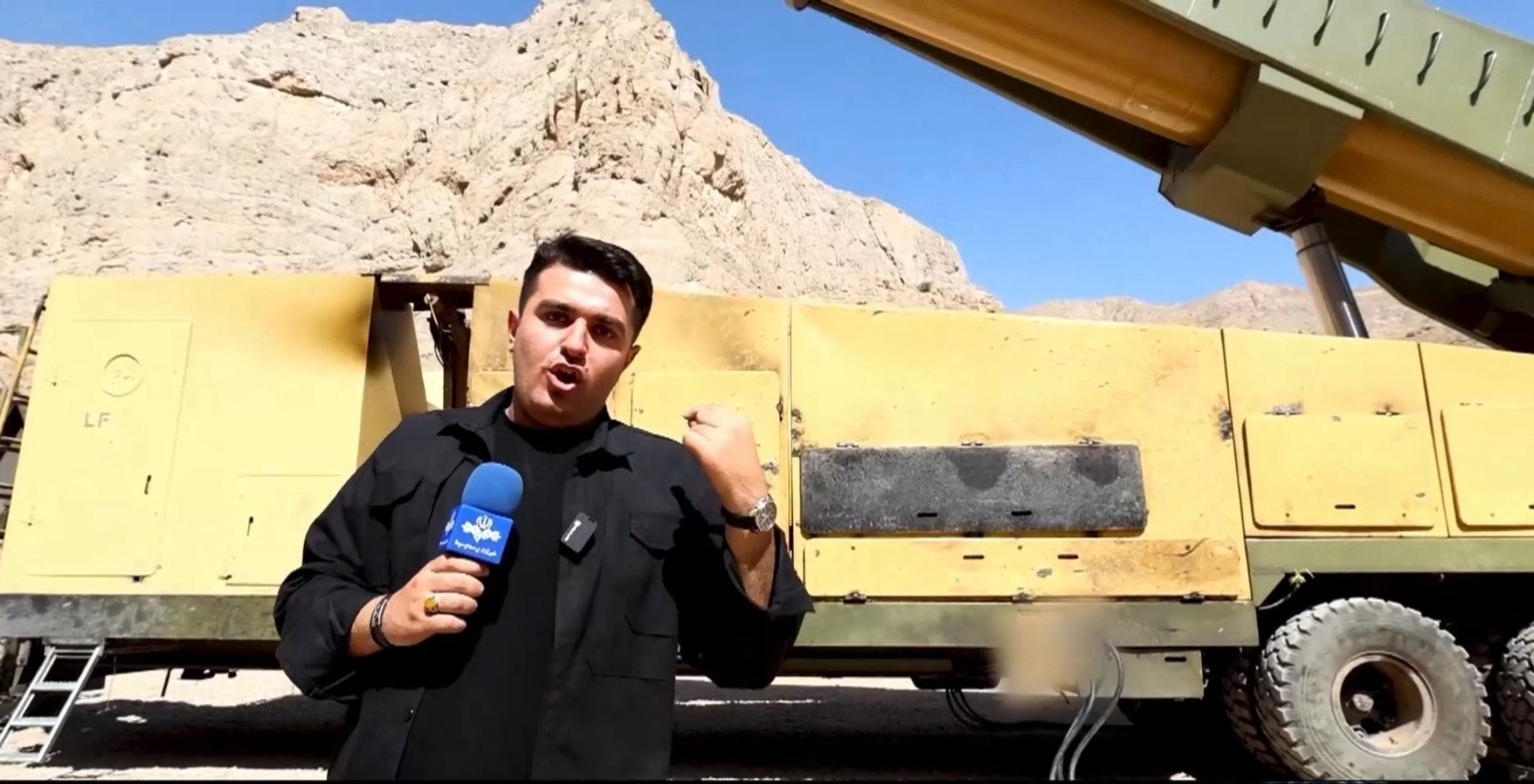
A documentary released in October provided additional insight into the condition of Iran’s mobile launcher force after the war. The footage, filmed inside one of the IRGC’s underground missile bases, showed a mix of repaired and newly delivered transporter-erector-launchers for medium-range ballistic missiles. Systems on display included liquid-fueled Ghadr and Emad missiles alongside solid-fueled Khaybar Shekan variants, including the Fattah-1. At least one launcher appeared to retain visible shrapnel damage, consistent with combat damage sustained during the conflict. The documentary also highlighted continued reliance on older vertical-launch trailers for liquid-fueled missiles, contrasted with newer angled-launch platforms used for solid-fuel systems. Taken together, the imagery suggests that some launchers damaged or disabled during the 12-day war have been returned to service, but that large-scale refurbishment or replacement of the mobile launcher fleet may still be incomplete.

The post-war period has likely prompted a reassessment of Iranian missile basing and survivability concepts. Although some elements of Iran’s missile force survived despite being targeted early in the conflict, reinforcing Tehran’s belief in the value of deeply buried and dispersed infrastructure, Israeli operations exposed important limitations in this approach. Strikes on tunnel entrances at missile bases across western Iran effectively sidelined units that remained protected underground, rendering them unusable for much of the war. Even where internal tunnel networks survived, missile units would have struggled to emerge and maneuver into firing positions under persistent surveillance from Israeli long-range drones and other intelligence assets.
These mixed lessons are likely to drive further adaptation of Iran’s underground missile basing strategy. Iran already maintains a network of underground “missile cities,” consisting of extensive tunnel complexes carved into mountainous terrain, particularly along the Persian Gulf coast and in the Zagros Mountains. Future development is likely to prioritize greater depth, redundancy, and alternative egress options. This could include genuinely deep underground silos capable of withstanding all but the most powerful bunker-penetrating munitions, as well as rail- or tunnel-based mobile systems designed to allow brief exposure for launch followed by rapid reentry into protected space.
Geographic dispersal is also likely to assume greater importance in Iranian operational doctrine. During the June war, the concentration of launch activity in western Iran reduced missile flight times but imposed significant operational costs by creating predictable spatial patterns that Israeli intelligence could exploit. In future contingencies, Iran may shift some launch activity deeper into its interior, including eastern provinces near the Afghan and Pakistani borders, accepting longer flight times in exchange for complicating adversary surveillance, targeting, and strike planning.
Stockpiling, Reserves, and Wartime Endurance
Missile stockpiling strategy and the management of reserves proved to be another critical dimension of operational endurance during the conflict. Before the June war, Iran was estimated by various intelligence agencies to possess somewhere between 2,000 and 3,000 missiles of various types and ranges, a substantial arsenal by any measure.
Firing approximately 600 missiles over twelve days, while simultaneously losing additional missiles and launchers to Israeli strikes, certainly drew down this inventory. However, the expenditure did not exhaust Iran’s missile forces, nor did it leave Tehran unable to continue operations had the conflict extended beyond two weeks. Not all of Iran’s pre-war inventory was immediately accessible or positioned for rapid use. Intelligence assessments suggest Iran maintained substantial portions of its missile force in deep storage—reserve stocks held in hardened facilities or remote locations, deliberately kept back from forward deployment to preserve a credible residual deterrent even after significant wartime losses.
Looking forward, Iran will likely formalize and expand such “reserve conversion” pathways and procedures while aiming to maintain substantially larger war reserve stocks, potentially sufficient to sustain a month or more of high-intensity operations rather than the roughly two-week capability demonstrated in June. This emphasis on deeper magazines fundamentally changes the character of Iran’s missile deterrent from a capability designed primarily for brief, intense retaliatory salvos toward something approaching sustained warfighting capacity.
The Path Forward
Had the June war extended significantly beyond its twelve-day duration, Iran would likely have faced increasingly serious operational strain. Launch rates would have continued declining as launcher attrition mounted and available missiles in forward positions dwindled. Production capacity, while resilient, could not replace losses at anything approaching real-time rates. Reserves would have eventually required commitment, progressively depleting the very capabilities Tehran sought to preserve as ultimate guarantors of regime survival.
Yet the conflict ended before these constraints became truly binding, and the lesson drawn in Tehran appears decidedly not to be one of restraint or accommodation. Instead, the dominant interpretation within Iranian military and political circles seems to be that the war validated missile-centric deterrence while simultaneously revealing specific areas requiring improvement: larger peacetime stockpiles, deeper and more geographically dispersed reserves, enhanced production capacity to enable faster regeneration of depleted forces, more survivable basing infrastructure, and a missile force even better adapted to fighting, surviving, and rapidly rebuilding under sustained combat pressure.
Taken together, these dynamics suggest that Israel is unlikely to accept Iran’s post-war missile rebuilding as a fait accompli. Instead, Israeli decision-makers are likely to continue pressing for preemptive or preventive options aimed at degrading Iran’s missile production, storage, and launch infrastructure before expanded capacities fully come online. Given Iran’s demonstrated ability to regenerate missile forces within months rather than years, such strikes may offer only temporary disruption rather than lasting denial. The result could be a recurring cycle in which Israeli efforts to roll back Iran’s missile capabilities are followed by rapid Iranian reconstruction, raising the prospect that large-scale strikes against missile infrastructure become a periodic feature of the regional security environment rather than an exceptional event.
"Iran may experiment with launching operations from urban or semi-urban areas, deliberately positioning military assets near civilian populations to complicate Israeli targeting decisions and deter strikes"
Surely, this would not deter strikes from the country that has made bombing hospitals and shooting aid seekers into a national sport.
Hi! This is my third article on Substack about Iranian mothers and their heroic courage, could you please restack it, should you find it interesting?
https://open.substack.com/pub/mahnazhatami/p/fear-a-mother-who-dances-over-her?r=6a6pnp&utm_medium=ios