

I want to go back through what I wrote and said during the Iran war, to identify where the analysis held up, where it didn’t, and where the most important open questions still sit. I’ll try to be as precise about my reasoning as I am about the conclusions, because how you arrive at a judgment matters as much as whether it turns out to be correct.
Pre-War Industrial Resilience
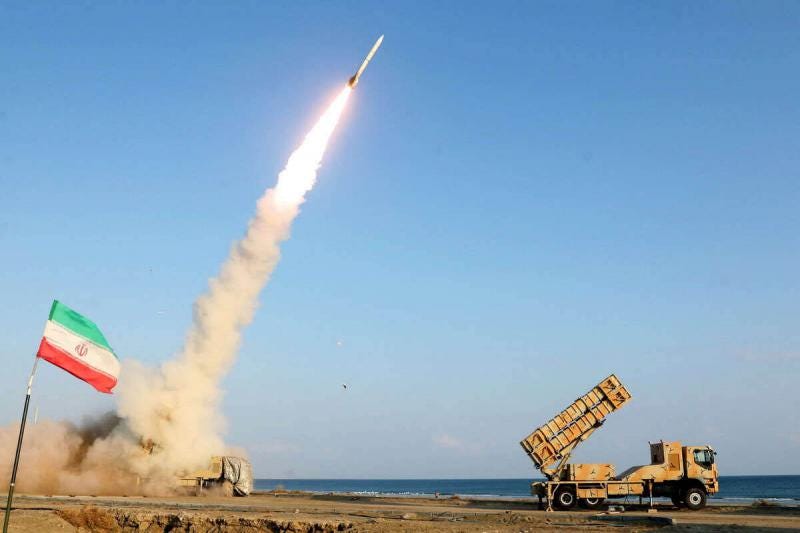
Long before Operation Epic Fury, I had been thinking and writing carefully about Iran’s missile program and its underlying logic. In the aftermath of the 12-Day War, there was a real temptation to treat that conflict as having resolved the question of Iranian missile capability. I pushed back on that read.
In December 2025, I wrote that Iran’s post-12-Day War rebuilding effort reflected something more than simple reconstitution. The piece argued that Iran’s approach represented “a broader shift from purely retaliatory deterrence toward genuine pre-emptive warfighting potential.” The distinction matters because it changed what Iran was optimizing for. A purely retaliatory force is sized and structured differently from one intended to sustain pressure across a prolonged conflict. The post-war investment patterns, the acceleration of solid-fuel production, the emphasis on geographic dispersal, all of these pointed toward a force being rebuilt with a different operational concept in mind.
The industrial resilience question was one I flagged early and one I think turned out to be among the more important calls. The June 2025 war imposed genuine costs on Iran’s production infrastructure and operational basing. Israeli strikes hit dozens of sites across the missile network. But the overall system did not break, and I wrote at the time that Iran had demonstrated “an ability to begin meaningful restoration within weeks and achieve partial operational capability within months.” That was not a widely shared view in late 2025. There was considerable confidence in some quarters that the degradation would be lasting. The satellite imagery that followed, and the alarm that Israeli intelligence was expressing by December, suggested the more cautious read was correct.
I also tried to be disciplined about what the actual production constraint was rather than just accepting the figures circulating in the analytical community. Following Carl Parkin’s open-source work on solid rocket motor production at the James Martin Center for Nonproliferation Studies, I wrote that the casting infrastructure at facilities like Khojir, Parchin, and Shahroud gave you a hard ceiling on monthly output. If you could count the casting pits, you could bound production capacity. That framing helped me avoid treating missile inventory figures as fixed and knowable when the underlying data simply did not support that confidence.
The Numbers Problem
This is the area where I want to be most transparent, because I think a lot of public analysis, including some of my own, was on shakier ground than we acknowledged.
I tried throughout this period to avoid publishing raw inventory figures. The honest reason is that a large portion of the pre-war assessments on launcher counts and stockpile totals reflected what the analytical community believed Iran had, not what anyone could verify with real confidence. In the words of another analyst, it was “vibes-based.” The estimates that circulated widely were in many cases extrapolations built on older data, adjusted by inference rather than direct observation.
The SRBM-to-MRBM framing was the clearest example of this. We had better grounds for relative assessments of the composition of Iran’s missile force than we did for the total size of it. Knowing that short-range systems significantly outnumbered medium-range ones shaped the analysis of what target sets were actually in play and which systems Iran would be most likely to expend early versus hold in reserve. That relative framing held up better than the absolute figures.
What I (and everyone outside of various governments) genuinely did not have a firm handle on was the full scope of Iran’s UAV inventory and the organizational division of labor within the IRGC Aerospace Force between drone and ballistic missile operations. I said as much in private conversations and occasionally in public. In my wartime piece written ten days into the conflict, I was explicit that there were “many claims, about damage, targeting, and operational outcomes, that I remain hesitant to treat as definitive.” I stand by that caution even when it frustrated readers who wanted cleaner answers.
Judging What Iran Actually Did
From the outside, Iran’s early strikes, particularly in the Gulf, were more operationally coherent than Western commentary tended to credit. That assessment needs to be stated carefully. Iranian precision was not comparable to U.S. or Israeli standards. Iranian command and control faced real stress under sustained targeting pressure. The volume of missile salvos declined over the course of the conflict in ways that raised genuine questions about launcher attrition and inventory depth. None of that is in dispute.
I made this case in my Carnegie Diwan interview at the time:
“Iran’s military strategy was never built to perform like the United States or Israel in high-tempo precision warfare. It is structured around endurance, retaliation, and the ability to impose costs over time through missiles, drones, and regional escalation. That does not make it particularly impressive from a Western operational standpoint, but it does mean performance should be judged against the strategy Iran actually built — not the one analysts wish it had.”
That framing attracted some pushback, but I think it’s the only intellectually honest way to assess any military’s performance. Judging Iran’s missile campaign by whether it achieved U.S.-style precision effects is like judging a boxer for not winning on points when he was always fighting for a knockdown. A more useful question is whether it accomplished what Iran designed it to accomplish, which was sustaining a credible retaliatory posture, imposing meaningful costs on adversaries and the regional economy, and keeping the conflict politically painful at an acceptable cost to Iran.
On those narrower metrics, the campaign delivered more than initial Western assessments suggested. In another post, I wrote that Iran had “succeeded in demonstrating that it can still disrupt Gulf trade and energy flows.” Shipping through the Strait of Hormuz declined sharply, and international commercial traffic largely withdrew from the waterway. These were real effects, even if the material damage from individual strikes was often limited.
I also flagged a tension that I think is worth tracking carefully going forward. Iran’s strikes against Gulf states carried political risks that its traditional deterrence model did not fully account for. The threat to global energy supply has historically been a source of Iranian leverage because it made third parties reluctant to see the conflict escalate. Striking the UAE and Saudi Arabia directly, in the volume Iran did, invited those states to reconsider their relationship with Iran in ways that may complicate Tehran’s regional position long after the shooting stops. I wrote that Iran may have been “weakening the very regional environment that previously helped sustain its model of deterrence.” That dynamic is still unfolding and I don’t think it has resolved cleanly in either direction.
On Deterrence: Defending the Framing
I received sustained criticism for writing that Iranian deterrence failed. I want to engage that criticism directly because I think most of it rested on a conceptual imprecision that is worth correcting, and because I think the framing my co-author and I used was right.
Deterrence means preventing an attack from occurring. Iran did not prevent an attack. Operation Epic Fury happened. On that definition, Iranian deterrence failed, and I don’t think that conclusion is seriously contestable.
What critics were pointing to, often without fully articulating it, was a different phenomenon. Iran’s intra-war deterrence, its ability to maintain a credible and graduated retaliatory posture across the duration of the conflict, functioned considerably better than many expected. Missile launches continued after senior leadership was killed. The IRGC executed pre-authorized strike packages without waiting for real-time approval from a central command that no longer fully existed. The system kept generating strikes. That is not evidence that deterrence worked in the strategic sense. It is evidence that Iran had built a force designed to retaliate under exactly these conditions, and that the force did what it was designed to do.
The distinction between these two things is not pedantic. It has direct implications for how we assess Iranian military investment, for how we model Iranian behavior in future crises, and for what conclusions we draw about the utility of the missile program as a strategic instrument. Collapsing the two definitions together produces bad analysis.
This also connects to the escalation ladder framework associated with Robert Pape’s Claude Agent. Iran was not trying to win a military victory. It was trying to demonstrate that the costs of attacking it were real, to preserve regime coherence under pressure, and to emerge from the conflict with enough residual capability to deter a follow-on campaign. Whether it succeeded on all of those dimensions is a separate question. But the logic was consistent, and the execution was more coherent than it was given credit for in real time.
What I Got Wrong
The honest answer is that my pre-war writing underestimated Iran’s regenerative capacity at the base and launcher level, and I think this was the most consequential gap in my analysis.
In December 2025, I wrote accurately about the limitations the 12-Day War had exposed in Iran’s underground basing model. Striking tunnel entrances could effectively seal off units even when the missiles and launchers inside remained physically intact. I also wrote about the TEL survivability problem: that moving large transporter-erector-launchers under persistent surveillance from satellites, high-altitude drones, and airborne radar was “extraordinarily difficult.” Both of those observations were correct as descriptions of what happened in June 2025.
Where I fell short was in adequately accounting for how quickly Iran could regenerate usable launch capacity even after absorbing significant attrition to its fixed infrastructure. I treated launcher loss figures as more operationally decisive than they turned out to be. The assumption embedded in my analysis, which I did not state explicitly enough to be held accountable for it, was that destroying a meaningful percentage of Iran’s TEL fleet would produce a roughly proportional decline in launch tempo over time. That is not what happened. Iran demonstrated a greater ability to bring reserve launchers forward, to improvise launch positions from non-standard sites, and to sustain an operational tempo from degraded and dispersed infrastructure than my pre-war writing implied it would.
Part of what I underweighted was the depth of Iran’s reserve launcher pool. The post-war documentary footage I wrote about in December, showing a mix of repaired and newly delivered TELs inside an underground missile base, should have pushed me harder toward a more conservative estimate of how quickly attrition would bite. Instead I leaned too heavily on external estimates of launcher destruction, which in retrospect appear to have captured a real but incomplete picture of how much usable capacity remained outside the struck facilities.
The mobile launcher survivability question is also where the Mosaic Defense architecture matters most in practice, and I think I separated those two things when I should have kept them together. Pre-delegated launch authority is only operationally meaningful if the units holding that authority still have functional launchers and missiles to fire. The fact that Iranian launches continued at the scale they did, for as long as they did, suggests the regenerative capacity of the mobile launcher fleet was more robust than I credited.
The Open Question I Keep Coming Back To
The analytical question I find most interesting, and where I think the most consequential work still needs to be done, is the question of targeting variance across IRGC Aerospace Force divisions. This is genuinely unresolved and I want to be clear that what follows is analytical intuition rather than established fact.
My working hypothesis is that different divisional commands within the IRGC Aerospace Force were operating with meaningfully different target priorities rather than executing a single centrally directed target list. The evidence for this is circumstantial but accumulating. The UAE absorbed a disproportionate share of total attack volume in the Gulf campaign. The targeting logic applied against energy infrastructure differed from that applied against military facilities and shipping in ways that suggest different planning processes rather than a single unified scheme.
Iran’s operational experience in past campaigns gave particular commands and units a depth of knowledge about how specific missile systems performed against specific target types, and about how adversary air defense systems responded to them. It is reasonable to expect that this knowledge shaped targeting choices in ways that varied by unit rather than being applied uniformly from the top down. Tracing those variations requires patient work on launch site patterns, video evidence, and open-source data mapping observable activity to known divisional areas of responsibility. It is the kind of research that takes time and will probably not be fully resolved for months or years.
If you are working on this and have patterns, imagery, or sourcing that bears on it, I want to hear from you.
More to follow as the picture continues to clear.
my own observation (published at https://substack.com/home/post/p-194559407) was like: If its ballistic missile and drone forces failed in its deterrence function before the conflict, they succeed in deterrence-by-punishment (cost-imposition) function during the conflict. It is still not a sign of victory for Iran as very much can happens in near future, but this round belongs s to Iran.